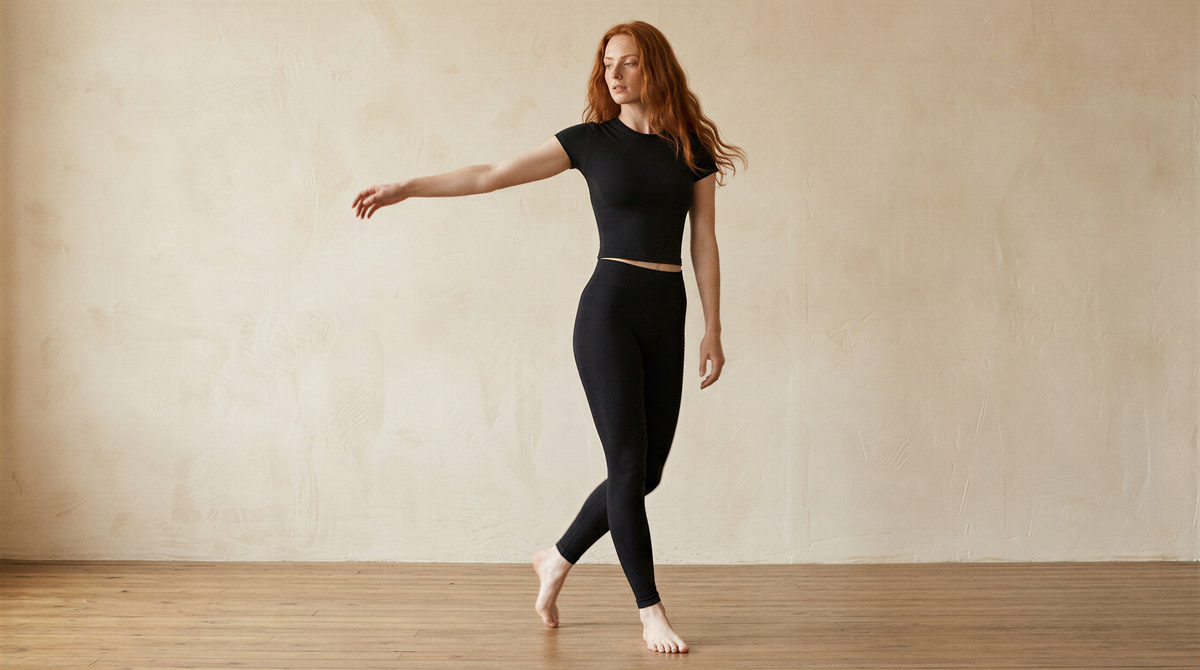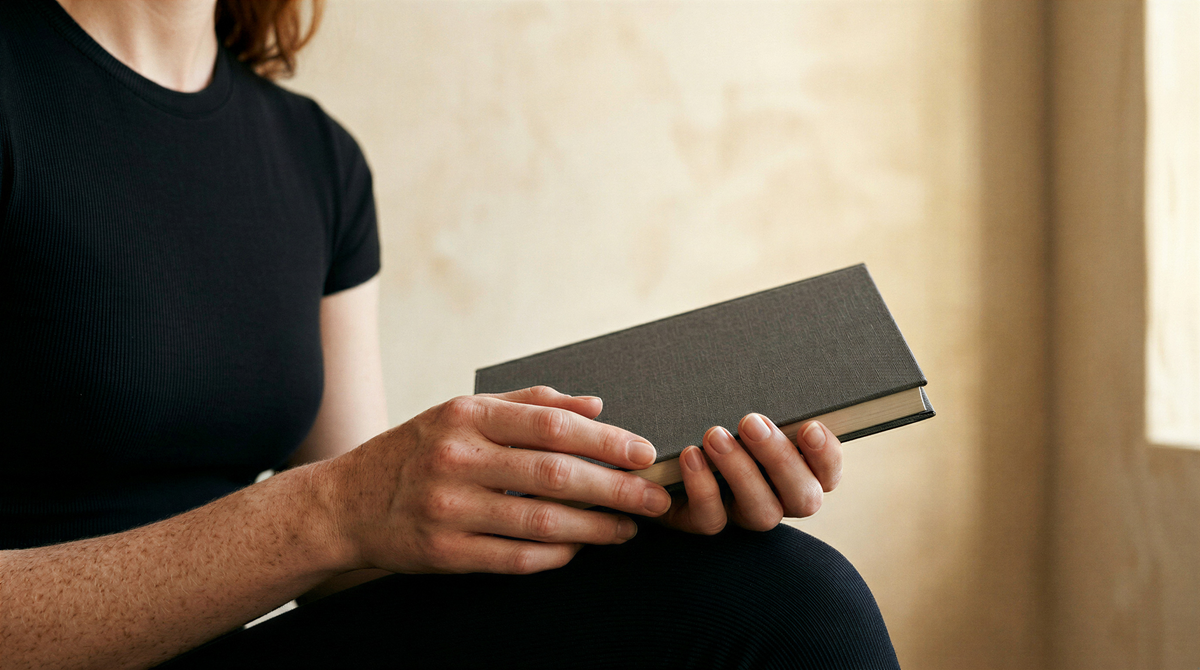
Fabric, Not Fashion
A piece of activewear is, in the end, a contract between you and the fabric.
Everything else — the silhouette, the seam placement, the marketing — sits downstream of one decision: what material is sitting against the body, and how does it behave when you move?
This is the question we asked first. It's the question most labels answer last.
The industry has trained women to shop activewear like fashion. To respond to color drops, to silhouette names, to seasonal collections that arrive faster than the season itself. What gets lost in that velocity is the fabric — the single variable that determines whether a piece earns its place in a drawer for two years or two months.
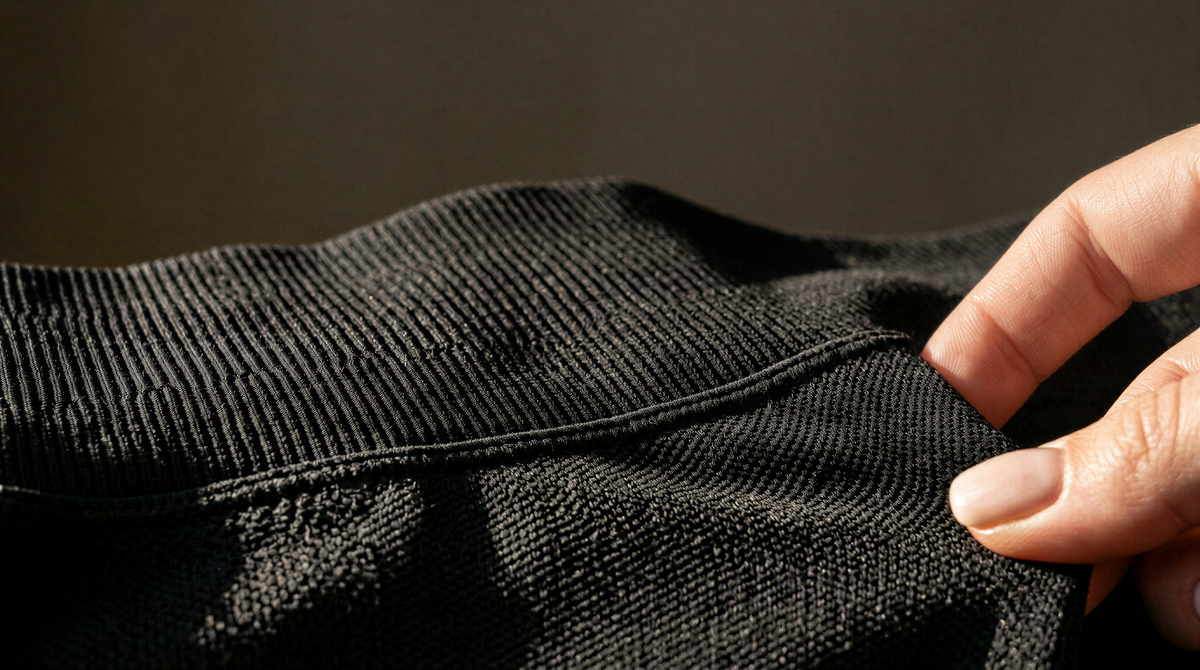
We work with dense technical knits chosen for resilience. Compression that holds without restricting. Recovery that survives the wash. Opacity that doesn't betray under bend or stretch.
These are not glamorous specs. They don't photograph well. They live in the part of the garment a customer rarely thinks about, and never until something goes wrong.
Going wrong, in activewear, looks like this: pilling at the inner thigh after five wears. A waistband that stretches into permanence. A seam that scratches at mile two. Color that fades in the second cycle. Sheerness that surfaces under squat.
Each of those failures is a fabric decision, made before the piece was ever cut.
We made different decisions. We chose a supplier whose pieces we had already worn for a year. We rejected weaves that performed well on paper but lost integrity in our wear tests. We tested each piece across washes and across a full season of wear.
The result is a collection that promises something the industry stopped promising: the piece will outlast the season.
That is the only fashion claim we'll make.